
Cana Desktop, cana.build
A browser the agent can see and use
Agents open, click through and check web pages in a built-in browser, a cloud browser that keeps your logins, or your own Chrome, and learn a task by watching you once.
How it works
The idea in 5 steps
- 1
The agent uses the page like a person
Cana Desktop has its own browser. The agent opens pages in it, clicks, types, fills forms, scrolls and reads what is on screen, so it can try your app instead of guessing.
- 2
You point, it fixes and checks
Developer tools under the page show elements, console messages and network requests; send any of them to the agent with one click. After changing code it reloads the page and looks again before it reports back.
- 3
Your own Chrome, from anywhere
With Cana Companion, agents work in your real Chrome tabs, signed in as you. Cloud chats and relays use it too, each in its own tabs, with no extra prompt, and pause while you use one of their tabs. Without it they use a cloud browser.
- 4
Log in once, stay signed in
Open Browser at the top of a chat, or the Browser tab on a relay you own, to watch its browser live. Click Take over to sign in to a site yourself, then Give back. The login is kept, encrypted, for later chats and relay runs. A relay can keep its own logins, use yours, or share its team's. Remove any of them in Settings, Browser.
- 5
Show it once, it learns
Ask an agent to learn a task, then do it yourself in its browser. It records each step with several ways to find the same button or field again, hides passwords, and keeps notes about the site that it improves every time it runs.
Tutorial
Step by step
Before you start
- Cana Desktop installed and signed in
- A web app running on your computer, for example on localhost:3000
- For the Chrome steps: Google Chrome with the Cana Companion extension
- 1
Open the browser
In Cana Desktop, click More tools on the left rail and choose Browser. If it is pinned, it sits on the rail itself.
You'll see: A browser pane opens with an empty address bar that reads Enter URL....
Tip: Not listed? Open Mods, go to Marketplace and add it from the Cana tools type.
- 2
Load your app
Click the Enter URL... bar, type the address of your running app, such as localhost:3000, and press Enter.
You'll see: Your app loads in the pane, just as it would in a normal browser.
- 3
Open the developer tools
Click DevTools in the browser toolbar.
You'll see: A panel opens beside the page with three tabs: Elements, Console and Network.
- 4
Pick the part that looks wrong
In Elements, hover over the page and click the broken part, for example a button that overlaps the footer.
You'll see: The element is selected and its details appear in the Elements panel.
- 5
Send it to the agent
Press Send to Agent, then type what you want in the chat, such as "Fix this overlap on small screens", and send.
You'll see: The element goes into the chat with your message, and the agent starts editing the code.
Tip: Console and Network have the same Send to Agent button for an error or a failed request.
- 6
Pair Cana Companion with Chrome
In Chrome, open the Cana Companion popup and press Pair with Cana Desktop. Back in Cana, approve the Pair with Cana Companion? request.
You'll see: Once approved, Chrome appears as ready in Cana's Browser mode menu.
- 7
Move the agent into Chrome
In Cana, open the Browser mode menu and choose Chrome instead of Embedded.
You'll see: The agent's next browser commands run in your real Chrome tabs, signed in as you.
Tip: Choose Embedded again to bring it back to Cana's own browser pane.
Worked example
Fix a broken sign-up page
Your sign-up form posts but nothing happens, and the console shows a red error. You want it fixed and proven to work without copying the error anywhere.
You type
Fix this error, then sign up as a new test user and tell me what you saw.
- 1.Open Browser and load localhost:3000/signup
- 2.Click DevTools, open Console and select the red error
- 3.Press Send to Agent and send the prompt
Result: The agent fixes the handler, reloads the page, signs up as a test user in the browser and reports that the account was created, with what it checked.
Troubleshooting
If something doesn't work
- Browser is not in the More tools menu
- It is a Cana tool you add once. Open Mods, then Marketplace, set the type filter to Cana tools and add Browser.
- The page stays blank
- Your app may not be running. Start it in a terminal, or ask the agent to start the dev server, then load the address again.
- Chrome says "Not connected" in the Browser mode menu
- Cana Companion is not paired yet. Use Install & connect in that menu, or press Pair with Cana Desktop in the Companion and approve the request in Cana.
- The agent sent nothing about my selection
- Select an element, a console message or a request row first, then press Send to Agent. Each tab sends only what is selected in it.
For you
Let the agent do the clicking in web tools you use every day
With Cana Companion the agent works in your own Chrome tabs, signed in as you, and asks before it acts. Repetitive web chores become one instruction.
Form filling
"Copy these ten contacts from the sheet into the CRM's new-contact form." Approve the actions from the side panel.
Page watch
Select an order status page and set a watch so you get notified when it changes.
Quick check before sending
Ask it to open the landing page you're about to share and report broken links or images.
A weekly report it learned from you
Show a relay once how you export last week's invoices from your billing site. It keeps the login and repeats the export every Monday.
What changes for professionals: Less time on repetitive clicking in web apps, with each action visible and approved.
Technical details
What it connects to, and the controls you have
- Built-in browser tools
- Elements, Console and Network tabs, each with a Send to Agent button
- What the agent can do
- Open and navigate pages, click, type, fill forms, scroll, read content, take screenshots, audit layout and watch pages for changes
- Browser targets
- Embedded (Cana's own browser pane) or Chrome through Cana Companion, chosen in the Browser mode menu
- Where to find it
- Browser is a Cana tool: open it from More tools on the left rail (or pin it), and add it from Mods, Marketplace if it is missing
- Pairing
- Started from the Companion's Pair button and approved in Cana Desktop, or by typing a one-time token shown in Cana's Settings
- Connection
- Companion talks to Cana Desktop over a local connection on your computer; web pages and other extensions are refused, and the pairing token stays in local storage and can be revoked
- Site knowledge
- Route and form maps for a site can be added in Settings so the agent goes straight to the right page
- Cloud browser
- Cloud chats and relays each get their own tabs, several per chat, and can never use another chat's tab; the browser closes itself when nobody is using it
- Watching it live
- The Browser button at the top of a chat opens its browser next to the chat, and opens by itself when the agent starts browsing; a relay's owner has a Browser tab; Take over and Give back hand you the mouse and keyboard
- Saved logins
- Kept encrypted per person, per relay or per bot team; a relay chooses Own, Mine or Team in its settings; Settings, Browser lists them with Revoke
- Cana Companion from the cloud
- Connects with your existing Cana sign-in, reconnects by itself and opens a minimised window only when cloud work needs one; it receives work only from your own chats and relays
- Learning a task
- Recorded steps keep several locators per element (test id, CSS, XPath, text, role); password values never leave the page, even inside an address
- Site memory
- Agents keep notes and element paths per site and update them as they work; you can see and delete them in Settings, Browser
Why Cana
What you get here
- The agent drives, reads and checks pages itself, so it verifies its own fixes
- Elements, Console and Network each send their selection to the agent in one click
- One toggle moves the agent between the built-in browser and your own Chrome
- Cana Companion pairs over a local connection that you approve, and can be disconnected at any time
Keep exploring
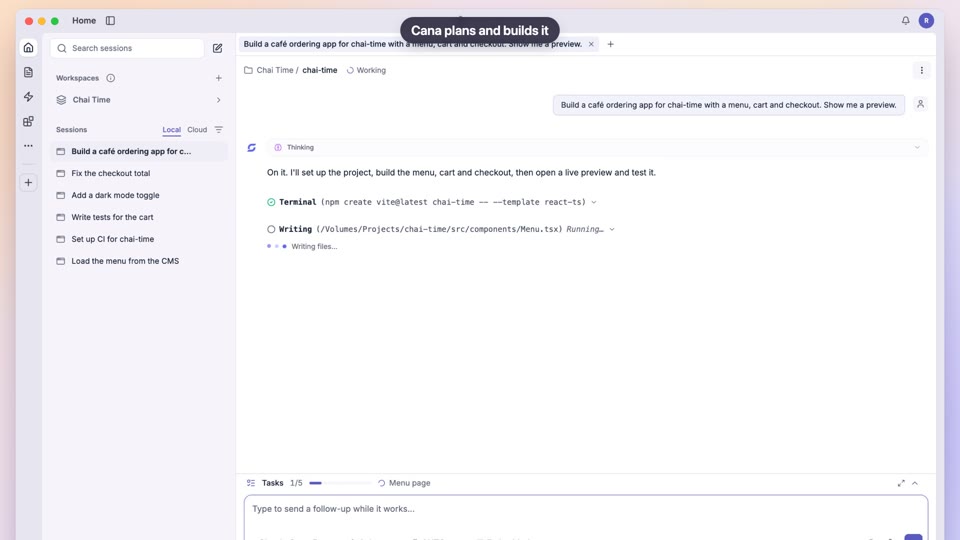
Build an app from one prompt
Make the internal tool you've been waiting for, yourself
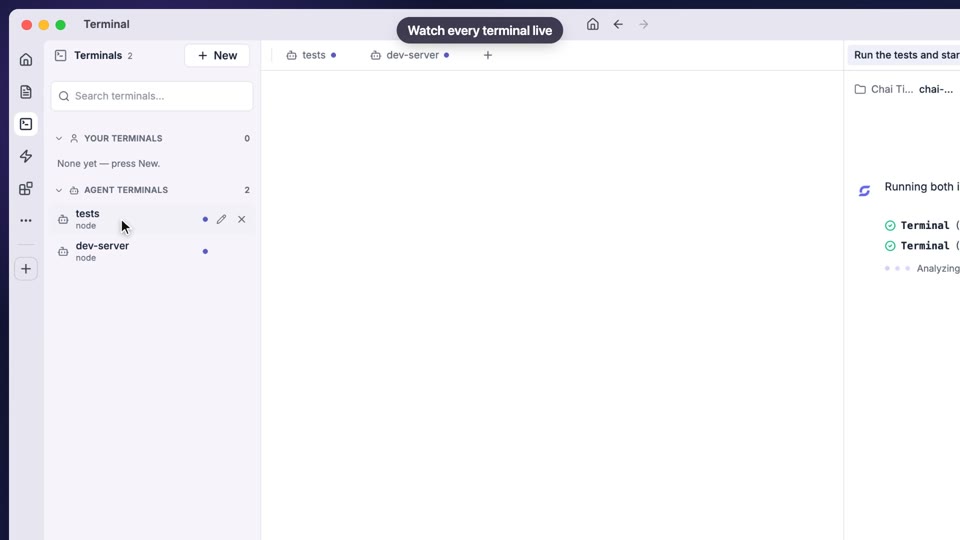
Code, terminal and approvals
Get scripts and small tools built without memorising commands
Memory, knowledge, skills and commands
Teach it your preferences once and keep them
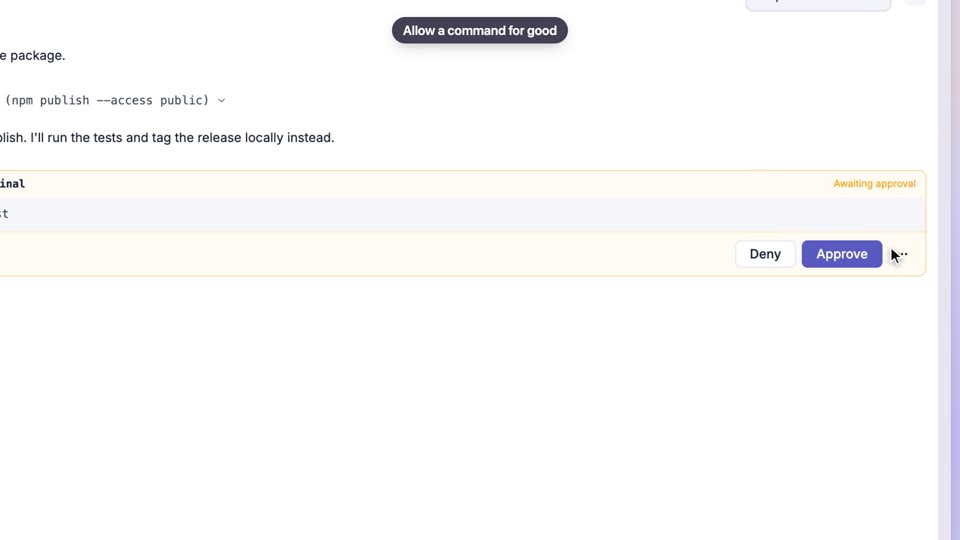
Permissions and approvals
Get help from an agent without worrying what it might touch